AIS Brings 'AI for All' Pitch to the Global Telecom AIoT Summit 2026 in Bangkok
Thailand's biggest mobile operator used the Global Telecom AIoT Summit 2026 to position itself as the country's enterprise AI-plus-IoT on-ramp — heavy on vision, light on specifics.
Key Takeaways
- AIS used the Global Telecom AIoT Summit 2026 in Bangkok to position itself as Thailand's enterprise AI-plus-IoT platform provider under the slogan 'AI for All.'
- The showcase offered no named products, customer deployments, or performance numbers, making it corporate positioning rather than a concrete product roadmap.
- The pitch reflects a global telco strategy of moving beyond commoditized connectivity into AI services, with Southeast Asian operators holding distribution advantages over hyperscalers.
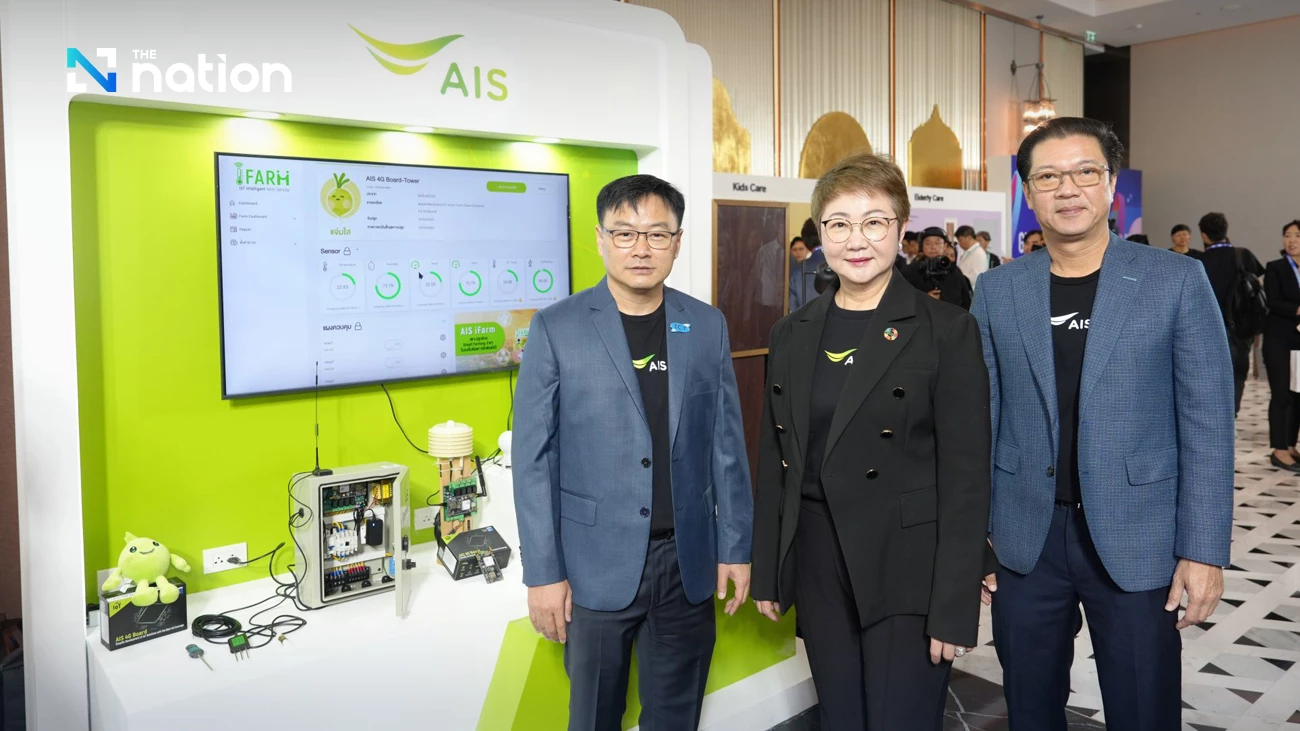
Thailand's largest mobile operator wants you to know it's an AI company now. At the Global Telecom AIoT Summit 2026, AIS rolled out a showcase built around the slogan 'AI for All,' pitching itself as the connective tissue between artificial intelligence and the sensors, machines, and factory floors of Thai industry. The summit — staged by the Telecommunications Association of Thailand, an industry body operating under royal patronage — drew a familiar mix of telecom executives, vendors, government officials, and international delegations, all there to talk about the marriage of AI and the Internet of Things.
According to The Nation Thailand, the AIS delegation was fronted by Saichon Submakudom, the company's Chief Corporate Communication, who along with other executives played host to visitors from government agencies, private firms, and overseas partners. The exhibit itself covered the standard enterprise stack: connecting smart devices to the network, moving and managing data in real time, and running analytics on top so businesses can actually make decisions with what they collect. Nothing exotic — but that's rather the point. AIS is selling plumbing, and plumbing is where telcos believe the AI money is.
Why every telco suddenly speaks fluent AIoT
If 'AIoT' sounds like a portmanteau invented in a marketing meeting, that's because it more or less is. But the logic underneath it is real. Telecom operators worldwide are watching their core business — selling connectivity — commoditize into a price war. The growth story they're all telling investors is the same one: move up the stack. Don't just sell the SIM card inside the factory sensor; sell the platform that ingests the sensor's data, the analytics layer that interprets it, and increasingly the AI models that act on it.
SK Telecom has rebranded itself around AI. Telefónica, e&, and Singtel have all built enterprise AI and IoT units. AIS, which serves tens of millions of subscribers in a market of roughly 70 million people, has been running the same playbook for years through its enterprise arm — 5G private networks for manufacturers, NB-IoT deployments, cloud partnerships. The Bangkok summit appearance is less a product launch than a flag planted in that ongoing land grab: when Thai businesses go shopping for AI infrastructure, AIS wants to be the first call, not the dumb pipe underneath someone else's platform.
There's a structural reason this pitch lands better in Southeast Asia than it might in the US or Europe. In markets where hyperscaler presence is thinner and enterprise IT departments are leaner, the telco often *is* the most sophisticated technology vendor a mid-sized manufacturer ever deals with. That gives operators like AIS a distribution advantage that AWS or Google can't easily replicate: existing billing relationships, local sales teams, and regulatory goodwill.
What was actually on the table
Here's where the skeptical reading kicks in. Strip the event coverage down to verifiable substance and you get three demo categories: smart device connectivity, real-time data management, and analytics for business decision-making. No named products. No customer deployments cited. No numbers — not on revenue, not on connected devices, not on model performance. The source material reads like what it is: a corporate communications exercise at an industry gathering, amplified through PR channels.
That doesn't make it meaningless. Trade summits like this one are where deals get seeded, and the guest list — government representatives alongside international partners — matters more than the booth. But readers who follow AI closely should calibrate accordingly. 'AI for All' is a positioning statement, not a roadmap. The interesting questions are the ones the showcase didn't answer: Whose models run in the AIS stack? Is inference happening at the network edge, in AIS data centers, or on a hyperscaler's cloud with AIS as reseller? Is there any actual machine learning in the 'data analytics that support business decision-making,' or is this dashboards with an AI sticker on them?
The honest answer, for most telco AIoT offerings globally, is 'a mix, and mostly the latter.' The IoT part is mature — operators have been connecting meters, trucks, and vending machines for over a decade. The AI part is usually thinner: anomaly detection, predictive maintenance models, some computer vision at the edge. Generative AI is creeping into these stacks, but slowly, and mostly in customer service and network operations rather than in the industrial products being demoed at summits.
The Thailand context makes this more than a booth
Zoom out and the summit fits a national storyline. Thailand has spent years pushing an industrial upgrade agenda — the 'Thailand 4.0' program and its successors — aimed at moving the country's economy beyond assembly-line manufacturing into higher-value, automated production. Thailand is one of the world's larger auto and electronics manufacturing hubs, which means there's a genuine, addressable base of factories that could use exactly the kind of sensor-to-analytics pipeline AIS is selling.
The summit's institutional backing reinforces that alignment. An event organized by the national telecom association, under royal patronage, with government officials in attendance, is about as establishment as Thai tech gets. For AIS — which competes domestically with True Corporation, the Telenor-CP merger that reshaped the market in 2023 — showing up as the AI standard-bearer at that kind of forum is competitive signaling as much as customer acquisition. Both operators are racing to own the enterprise digitization narrative, because consumer mobile in Thailand is a saturated, two-and-a-half-player knife fight.
For builders and AI vendors, the takeaway is about channels. If you're selling industrial AI, edge inference hardware, or vertical ML applications into Southeast Asia, the telcos are increasingly the gatekeepers — they have the customer relationships, and summits like this are where they audition partners. AIS publicly courting 'local and international partners' is, read between the lines, an open invitation.
What to watch next
The gap between 'AI for All' the slogan and AI-for-all the reality will be measured in disclosures that haven't happened yet. Watch for named customer deployments with outcomes attached — a factory that cut downtime by a stated percentage beats any number of summit booths. Watch for model partnerships: if AIS announces tie-ups with a specific foundation model provider or hyperscaler for its enterprise stack, that tells you who actually owns the intelligence layer. And watch whether the offering ever reaches small businesses, the segment 'AI for All' rhetorically promises but enterprise pricing usually excludes.
There's also a regional race worth tracking. Operators across ASEAN are converging on identical AIoT positioning, and the winners will be decided less by keynote slides than by who builds the boring stuff well — device management at scale, data sovereignty compliance, integration with legacy factory systems. AIS has the market position and the government relationships to be that player in Thailand. Whether the Summit 2026 showcase was the start of something or just another booth with good signage is a question its next earnings calls, not its press releases, will answer.