
Ookla Mined 3.72M Downdetector Complaints: AI Outages Are Now a Business Risk
A new Ookla analysis of 471 days of US Downdetector reports finds AI platforms have crossed from optional tools to core infrastructure — and their failures now break real workflows.
Key Takeaways
- Ookla analyzed 3.72 million US Downdetector reports across ChatGPT, Claude, Gemini, Copilot, AWS, and Azure over 471 days, arguing AI outages now disrupt core business workflows.
- The report highlights agentic workloads as the key risk shift: long-running tasks have more failure points, and a mid-run outage can destroy accumulated work rather than costing a resent prompt.
- The article notes major caveats: Ookla owns Downdetector, the 10x-median threshold ignores severity and duration, and user complaints miss silent API degradation that matters most for agents.
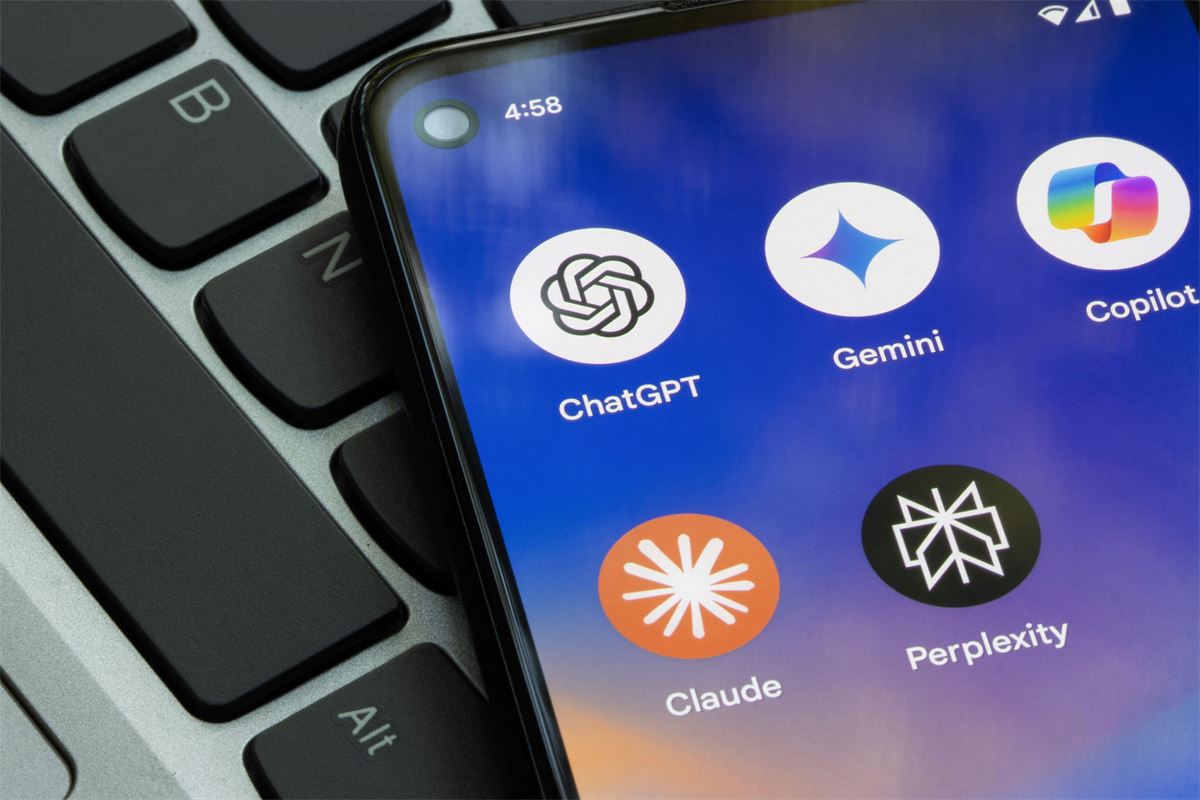
Nobody files a Downdetector report about a toy. That's the quiet subtext of a new Ookla study, first covered by Advanced-television, which sifted through 3.72 million user-submitted problem reports across ChatGPT, Claude, Gemini, Microsoft Copilot, AWS, and Microsoft Azure. The dataset spans 471 days of US traffic, from January 1, 2025 through April 16, 2026 — long enough to capture the period when chatbots stopped being a lunchtime curiosity and started sitting inside actual business processes. The headline finding isn't any single outage. It's that the risk profile of AI has fundamentally changed shape, because the way people use it has.
Two years ago, an LLM going dark for an hour meant some delayed emails and a few annoyed developers. In 2026, the same hour can stall a code-generation pipeline, freeze a customer-support queue, or kill an agentic task that was forty minutes into a job nobody wants to restart. Ookla's framing, per the Advanced-television write-up, is blunt: the growth that makes AI valuable is exactly what makes its reliability a problem worth measuring.
From chat window to load-bearing wall
The report's core observation is about workload duration, and it deserves more attention than it usually gets. A traditional chat session is short and stateless — if the service hiccups, you resend the prompt and lose thirty seconds. Agentic workloads invert that math. A long-running task that orchestrates file access, code execution, and third-party connectors has many more points of failure, and each failure is more expensive because it can torch accumulated state. Ookla's catalog of failure modes reads like a support ticket queue from the future: login loops, stalled code tasks, files that won't load, connectors that silently break mid-run.
This tracks with what enterprise IT has been doing all year. Companies aren't just licensing ChatGPT seats anymore; they're wiring Claude, Gemini, and Copilot into structured workflows — ticketing systems, internal knowledge bases, CI pipelines. Once an AI model becomes a step in a process rather than a destination, its uptime stops being the vendor's marketing metric and starts being your operational dependency. That's why Ookla bundled AWS and Azure into the same analysis as the model providers: when you're running agents, the distinction between "the model is down" and "the cloud underneath it is down" is academic. Either way, your workflow is dead.
How Ookla defines a bad day
Methodology matters here, because raw Downdetector volume is a famously noisy signal. Ookla's answer is a relative threshold: a "high-signal disruption day" is any day a single service logs more than ten times its own median daily report volume across the full study window. Indexing each platform against its own baseline is the right call — it stops ChatGPT's enormous user base from drowning out everyone else, and it filters the constant background hum of individual users with broken Wi-Fi blaming the chatbot.
It's a clean definition, but it carries assumptions worth poking at. A 10x-over-median spike tells you a lot of people noticed something at once; it doesn't tell you severity, duration, or root cause. A five-minute global blip and a six-hour regional degradation can both clear the bar. And median-relative thresholds behave oddly for services with very low baseline complaint volume, where a modest absolute spike can read as a major event. None of this invalidates the approach — it's arguably the best you can do with crowdsourced data — but it means the report measures perceived disruption, not engineering reality.
The skeptic's read
There's also the matter of who's holding the magnifying glass. Ookla owns Downdetector, so this research doubles as a showcase for its own data product, aimed squarely at enterprises now shopping for AI observability. That doesn't make the findings wrong, but it does explain the framing: a world where AI downtime is a board-level risk is a world where Downdetector's enterprise telemetry is worth paying for. Read the takeaways with that incentive in mind.
The deeper limitation is that user-reported data captures a specific slice of failure. Downdetector lights up when consumers can't log in. It stays quiet when an API silently degrades, when latency doubles, when a model starts returning subtly worse outputs, or when an agent's tool call fails in a way the end user never sees. For the agentic era the report itself describes, those invisible failures may matter more than the visible ones. The complaint graph is a lagging, consumer-shaped shadow of the actual reliability picture — useful, but nobody should mistake it for an SLA dashboard.
Still, the directional story is hard to argue with, because we've watched it play out in real time. Every major provider has eaten high-profile incidents in the study window, and each one generated a now-familiar ritual: screenshots of error messages, a trending hashtag, and a thousand quote-posts from people discovering exactly how much of their job had quietly migrated into a chat window. That cultural reflex — outage as minor news event — is itself evidence for Ookla's thesis. You don't get mass public mourning for software that doesn't matter.
What this means if you're building on these platforms
For developers and IT leads, the practical takeaway is to treat frontier AI services the way you'd treat any other critical third-party dependency, because that's what they are now. That means multi-provider fallback paths where the workload allows it, checkpointing for long-running agent tasks so a mid-run failure doesn't erase the work, retry logic that distinguishes between a transient blip and a real incident, and honest internal accounting of which business processes silently assume an LLM is available. Most organizations did this for payment processors and cloud regions years ago. Very few have done it for their model providers.
For the providers themselves, the bar is moving. OpenAI, Anthropic, Google, and Microsoft have all spent 2025 and 2026 selling agents — systems explicitly pitched to run unattended for hours. That pitch is a reliability promise whether the marketing copy says so or not, and crowdsourced complaint data is one of the few independent yardsticks the public has for checking it. Expect status pages, incident postmortems, and uptime commitments to become competitive surface area in enterprise deals, the way they did for cloud infrastructure a decade ago.
The thing to watch next is whether anyone starts publishing AI reliability data with real teeth — contractual SLAs for agentic workloads, third-party uptime audits, or standardized incident disclosure. Ookla's 3.72 million data points are a crowdsourced first draft of that accountability layer. The fact that the draft exists at all tells you the industry has crossed a line: AI is no longer judged only on what it can do, but on whether it shows up for work.